Water Damage Restoration Liberty, MO
When a sump pit overflows, a pipe splits in a cold snap or a floor drain backs up, the restoration team extracts the water and dries the house to the IICRC S500 standard.
(888) 603-7319Get the wet basement pumped out tonight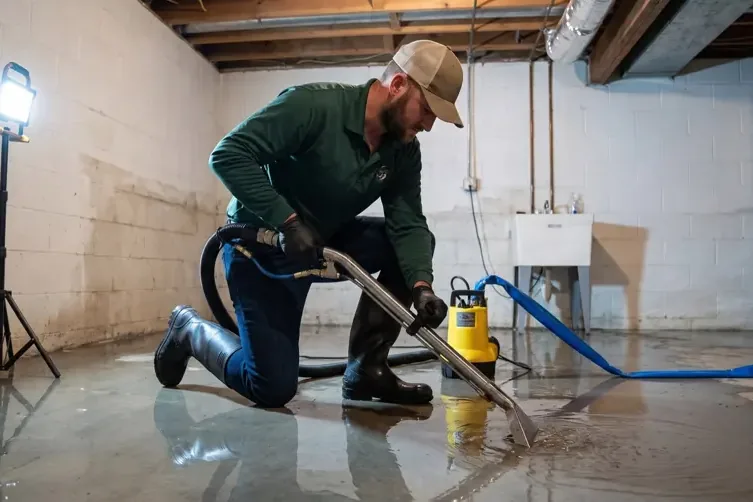
Water Damage Restoration Services in Liberty, MO
Water and sewage only, from the first pump-out in the basement to the last dry reading on the framing, with each loss handled by its source and its water category.
 Water Extraction and RemovalTruck-mounted and portable extraction pulls standing water off carpet, hardwood and concrete before it wicks into the walls.View service
 Basement Flooding CleanupFinished lower levels pumped out, wet pad and drywall cut back, and the slab and wall bottoms dried to a reading.View service
 Sump Pump Failure CleanupA dead pump, a stuck float or a storm power outage floods the pit; the basement is extracted and dried.View service
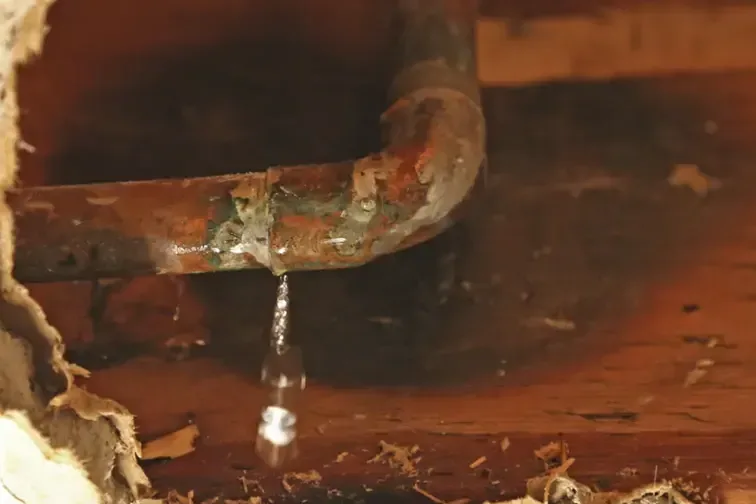
 Burst Pipe Water DamageSplit supply lines inside walls and ceilings opened up, the cavities dried and every wet surface metered.View service
 Frozen Pipe Water DamagePipes in exterior walls, garages and rim joists that freeze in a cold snap and leak once they thaw.View service
 Sewage Backup CleanupFloor drain and lateral backups handled as Category 3, porous materials removed and every surface disinfected.View service
 Storm and Flash Flood CleanupCreek overflow and heavy-rain runoff through doors and window wells treated as contaminated water and dried out.View service
 Roof Leak Water DamageHail, wind and ice-dam leaks traced from the roof deck down, wet attic insulation pulled and framing dried.View service
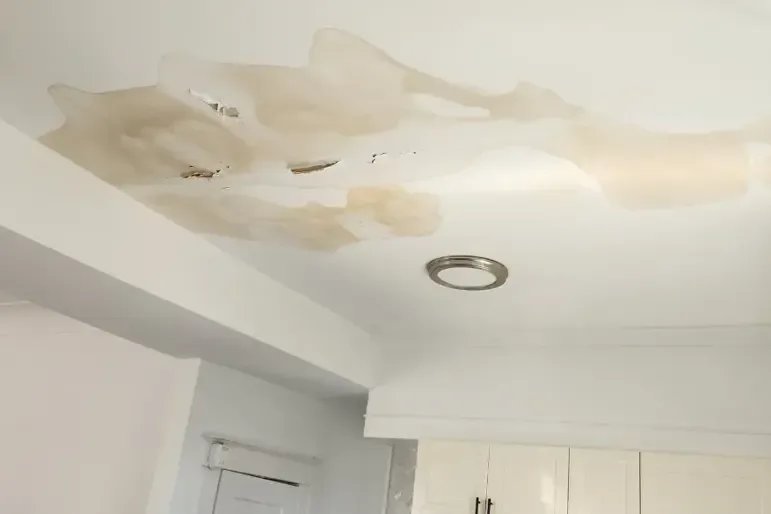
 Ceiling Leak Water DamageUpstairs bath, drain and supply leaks traced, sagging drywall opened safely and the joist bays dried.View service
 Water Heater Leak CleanupA tank that rusts through in the basement soaks carpet, drywall and stored boxes; it is extracted and dried fast.View service
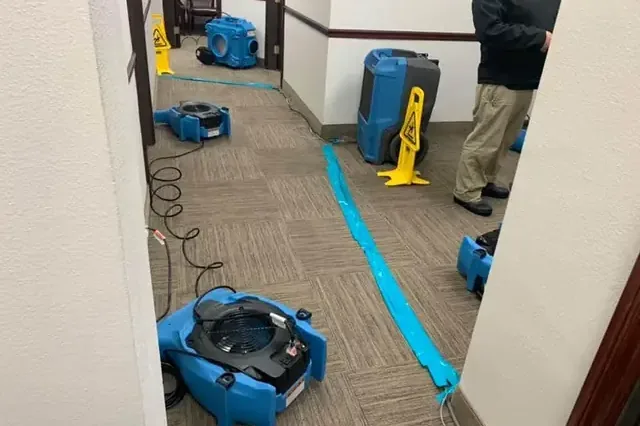
 Structural Drying and DehumidificationAir movers and LGR dehumidifiers dry framing, subfloor and concrete to within 2 to 4 points of a dry reference.View service
 Commercial Water DamageOffices, shops, churches and apartment buildings dried in phases so the doors can stay open.View service
Round-the-clock water damage dispatch for Liberty, MO
One call starts a crew moving, day or night
The response team covers ZIP 64068 and 64069, from Courthouse Square and the college hill to the subdivisions off Route 291, plus the nearby Clay County towns.
(888) 603-7319Put a Clay County crew on the roadWhy a measured dry-out matters below grade
Water on a basement slab hides in carpet pad, wall bottoms and the stud cavities behind finished drywall, so the job runs on meters and logs, not on looks.
- Urgent at any hour. Active water gets the same response on a holiday weekend as on a Tuesday morning, because drywall and subfloor keep wicking until extraction starts.
- Equipment sized by the numbers. The IICRC S500 class of loss sets how many air movers and LGR dehumidifiers go in each room, so drying is planned rather than guessed.
- A record an adjuster can follow. Moisture maps, daily psychrometric logs and timestamped photos taken before any demolition document the whole loss from day one.
- Sump pits and floor drains checked. Backwater valves, sump pumps and private sewer laterals get a look, because that is where lower-level water in older homes usually starts.
Five steps to take before the extraction crew arrives
- Stop the water. Close the main shutoff, usually where the water line enters the basement, if it is safe to reach.
- Kill power near water. Switch off breakers for a flooded basement only when the panel can be reached from a dry floor.
- Stay off the drains. If water came up through a floor drain, do not run the washer, dishwasher or shower until the sewer clears.
- Lift what can move. Put boxes, rugs and electronics on shelves or carry them upstairs, and leave soaked drywall and carpet alone.
- Photograph everything. Take photos and video of every wet room and the source before cleanup starts, for the insurance claim.
How water damage restoration is handled in Liberty
Every dry-out follows the IICRC S500 standard: find the source, map the moisture, extract, dry with sized equipment and log the readings daily until the materials reach the goal.
Walkthrough and moisture map
The tech finds the source, sets the water category and maps how far the water traveled with pinless meters and a thermal camera.
Extraction
Truck-mounted and portable units pull standing water off carpet, pad and the basement slab before any fan goes down.
Drying setup
Air movers and LGR dehumidifiers are placed for the class of loss, with wet drywall cut above the wick line where needed.
Daily readings to the goal
Readings are logged every day until materials sit within 2 to 4 points of a dry reference, then the equipment comes out.
Clean, gray or black water: why the source changes the plan
Category 1: clean water
Supply lines, a burst pipe or a water heater. Caught early, carpet and drywall can often be dried in place.
Category 2: gray water
Washer discharge, a dishwasher or an overflowing sump pit. Pad usually comes out and surfaces get an antimicrobial.
Category 3: black water
Sewer backups through a floor drain, plus creek or storm runoff. Porous materials it touched are removed, not dried.
What does water damage restoration cost in Liberty, MO?
In Liberty, MO, water damage restoration typically runs $1,200 to $15,000 or more. The category of water, the square footage, the material class and how fast drying started move the number most.
One room, clean water
- Extraction and drying
- Pad and baseboard check
- 3 to 4 days of drying
Finished basement
- Flood cuts above the wick line
- Carpet pad removed
- LGR drying of slab and studs
Sewage or creek water
- Category 3 containment
- Porous materials removed
- EPA-registered antimicrobial
Ranges are typical, not a quote. The water damage cost calculator gives a closer range, and the walkthrough and moisture map set the real scope of the job.
Insurance and the claim file
Adjusters want proof of what got wet, how wet it got and for how long. The restoration team builds that record during the job, not after it.
- A moisture map of every affected room
- Daily psychrometric logs and meter readings
- Timestamped photos taken before any demolition
- The water category and the class of loss
- A line-item scope of the work
Check your own policy
Sudden and accidental water, like a burst pipe or a water heater that fails, is often covered. Flood water from outside and sewer or sump backups are usually treated differently.
Sewer and sump backup coverage is often an added endorsement, so read the policy or ask your own insurer before assuming either one is covered.
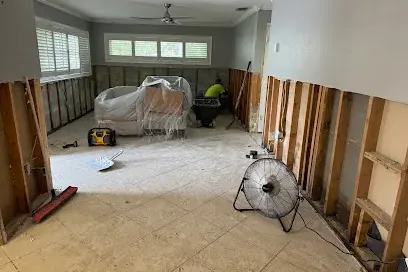
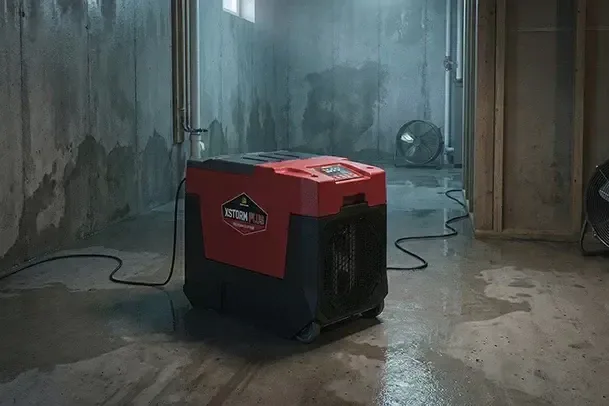
What a basement and room dry-out looks like up close
Water damage coverage across Liberty and Clay County
ZIP codes
Outside these ZIPs but still in Clay County? Call anyway and name the town or the nearest cross street.
Neighborhoods and corridors
Nearby communities
What drives water damage in Liberty homes
Liberty was settled in 1822, so historic districts near Courthouse Square sit beside newer neighborhoods off Route 291 and I-35, and a basement, floor drain or sump pit is often where water shows up first.
Heavy rain and the sewer
The City of Liberty utilities FAQ notes the sanitary sewer can occasionally run beyond capacity in heavy rain. A backflow valve on the home's sewer line is built to close then, but it only helps if household drains stay off while it is closed.
Sump pumps and power loss
A sump pump protects the basement only while it runs. Spring storms that stall over Clay County, a stuck float or a power outage let the pit overflow onto the slab.
Hard freezes
Missouri winters bring cold snaps that freeze pipes in exterior walls, garages and rim joists. The split stays hidden until the thaw, then the split pipe floods the wall cavity.
Creeks and the floodplain
The City of Liberty stormwater master plan studies Rush Creek, Cates Branch, Town Branch and Little Shoal Creek, and it notes homes and streets inside the 100-year floodplain along Cates Branch at Murray Road.
Older plumbing in the historic districts
Homes in Dougherty-Prospect Heights, Jewell-Lightburne and Arthur-Leonard carry older supply and drain lines and private sewer laterals the owner maintains, so a failed fitting or a blocked lateral can start a loss.
August 21, 2017
Flash flooding across the Kansas City area closed a bridge over Rush Creek just east of town, according to a National Weather Service storm report.
Water damage questions from Liberty homeowners
Water still spreading in the house?
Skip the reading for now. Shut off the main if it is safe, stay out of standing water and get extraction started.
(888) 603-7319 Ask about the water downstairsHow fast does the restoration team respond in Liberty?
Active water is treated as urgent at any hour, weekends and holidays included. Dispatch runs 24/7, and the crew confirms an arrival window during the first call. The sooner extraction starts, the more drywall, pad and framing can be dried instead of replaced.
What should be done while waiting for the crew?
Shut off the main valve if it is safe to reach, turn off power to wet areas only from a dry spot, and keep everyone out of standing water. Move rugs and boxes up, photograph every wet room and leave wet drywall in place.
Why did water come up through the basement floor drain?
A floor drain tied to the sanitary sewer backs up when the city main or the private lateral cannot carry the flow, which the city utilities FAQ says can happen in heavy rain. That water is Category 3 sewage and is handled with protective gear and disinfection.
How long does it take to dry a flooded basement?
Most basement losses dry in three to five days once extraction is done, longer for a thick slab, plaster or hardwood. Drying ends when readings, not the calendar, show the materials within 2 to 4 points of a dry reference.
What does IICRC S500 mean?
IICRC S500 is the industry standard for water damage restoration. It sets how the water category and class of loss are judged, how equipment is sized and how drying is verified with moisture readings instead of touch.
When does drywall have to come out?
Drywall is cut out when it held Category 3 water, when it stays wet past the 24 to 48 hour window in which mold growth can begin, or when the insulation behind it is soaked. Clean water caught early can often be dried in place.
Is a sewage backup treated differently from a burst pipe?
Yes. Sewage is Category 3 from the start, so the crew wears PPE, removes porous materials above the waterline and applies an EPA-registered antimicrobial at its full dwell time. Clean water from a burst pipe can usually be dried in place.
Will homeowners insurance pay for water damage?
Sudden and accidental water, such as a burst pipe, is often covered. Flood water and sewer or sump backups are usually excluded or need an endorsement. Coverage depends on your policy, so check with your own insurer before work starts.
How is the cost of a dry-out figured?
Cost follows the water category, the square footage, the material class and how fast drying started. A clean-water room caught early costs far less than a finished basement with sewage. The cost calculator gives a typical range.
Can a frozen pipe leak days after the freeze?
Yes. Ice can split a pipe in an exterior wall or garage during a cold snap and stay quiet until it thaws. Then water runs inside the wall cavity, so check the meter and look for wet baseboards after any hard freeze.
Water in the basement or behind a wall? Get the drying started tonight.
Water that sits keeps spreading. The response team extracts, dries and documents the loss across Clay County, day or night.
(888) 603-7319Start the Liberty dry-out now